
Landlords and Lettings

Welsh Landlord Law Changes: a guide for Cardiff Landlords

Learn about the latest Welsh landlord law changes and what they mean for Cardiff landlords. Understand key requirements and prepare for the June 2026 updates.

A guide for Cardiff landlords

If you're a landlord in Wales, you've probably seen plenty of headlines about recent changes to the private rented sector.

With so much information circulating, it's understandable that many landlords are unsure which rules apply in Wales and what action they need to take.

Wales already operates under its own housing legislation through the Renting Homes (Wales) Act. However, further changes came into force on 1 June 2026, introducing new requirements around tenant selection, property advertising and occupation contracts.

The good news is that most landlords won't need to completely overhaul how they manage their properties. However, there are a few important steps to take before 14 June 2026 to ensure you remain compliant.


Here's what WELSH landlords need to know.


Review your property advertising

One of the most significant changes relates to how rental properties are advertised and marketed.


Landlords and letting agents must ensure that applicants are considered fairly and without discrimination. This means avoiding blanket restrictions against certain groups of people, including those with children or those receiving benefits.

If you currently advertise properties yourself, now is a good time to review any wording used in listings, social media posts or marketing materials.

Phrases that automatically exclude applicants based on their circumstances may no longer be appropriate under the updated rules.

That doesn't mean landlords lose the ability to assess affordability, references or suitability. It simply means that applications should be considered on an individual basis and decisions should be made fairly and consistently.


Update occupation contracts

Another key change affects occupation contracts.

From 1 June 2026, any new occupation contract issued in Wales must include the updated legal terms required under the legislation.

For existing contract holders, landlords are required to provide written updates reflecting the new provisions by 14 June 2026.

For landlords managing multiple properties or tenancies, this deadline can easily be overlooked, particularly if documentation has not been reviewed recently.

Taking the time to ensure contracts are up to date now can help avoid potential compliance issues in the future.


Keep records of tenant selection decisions

Good record keeping has always been a sensible practice, but it is becoming increasingly important.

When assessing applicants, landlords should be able to demonstrate that decisions have been made fairly and consistently.

Simple records can be enough. For example:

  • Who applied for the property
  • What information was considered during the application process
  • Why a particular applicant was selected

You don't need extensive paperwork, but keeping a clear audit trail can provide reassurance if a decision is ever questioned.


Review referencing and affordability checks

Most landlords already carry out affordability checks and referencing before granting a tenancy.

The key consideration now is whether those processes are being applied consistently to every applicant.

It's worth reviewing your current approach and asking:

  • Are the same criteria used for every applicant?
  • Are affordability assessments clear and objective?
  • Could any part of the process unintentionally disadvantage someone based on their personal circumstances?

The legislation does not prevent landlords from making sensible decisions about who can afford a property. However, those decisions should be based on evidence and consistent criteria rather than assumptions.


Check your Rent Smart Wales registration

Landlords in Wales should already be registered with Rent Smart Wales and, where required, hold the appropriate licence.

With the latest changes now in force, it is a good opportunity to ensure all registrations, licences and records remain up to date.

A quick review today could save unnecessary issues later.


Common questions from landlords

Do I have to accept tenants who receive benefits?

No. Landlords can still assess affordability, references and suitability. The change means that applicants should not be automatically excluded simply because they receive benefits.

Do I have to accept families with children?

No. As with all applications, landlords can consider whether a property is suitable for the prospective occupiers. However, blanket policies that automatically reject applicants with children should be avoided.

Why is there so much discussion about these changes?

Many landlords will have seen media coverage of rental reform across the UK, particularly in England.

While Wales already operates under a different legal framework, the latest changes introduce additional responsibilities for Welsh landlords around advertising, occupation contracts and tenant selection practices. Understanding what applies in Wales is the key to remaining compliant.


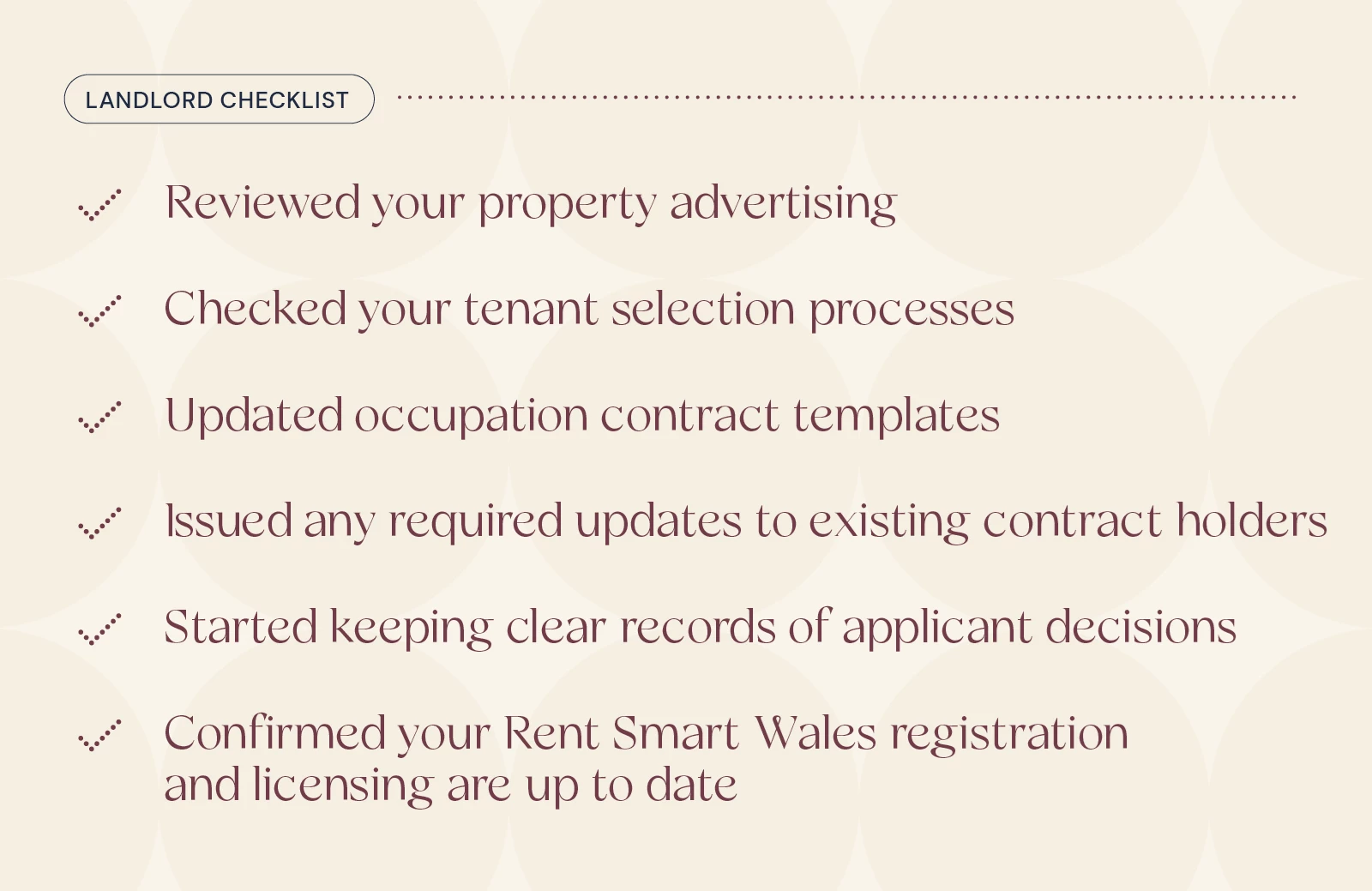
A simple landlord checklist

Before 14 June 2026, landlords should ensure they have reviewed their property advertising to make sure it complies with the updated requirements, checked their tenant selection processes, updated any occupation contract templates, and issued any necessary updates to existing contract holders. It is also important to start keeping clear records of applicant decisions to demonstrate fair and consistent practices, while confirming that Rent Smart Wales registration and licensing arrangements are fully up to date.

We're here to help

Keeping up with changes to rental legislation can feel like a full-time job, particularly for landlords managing their own properties alongside work and family commitments.

Whether you own a single rental property or a larger portfolio, our experienced lettings team can help you understand your responsibilities, review your documentation and ensure you're ready for the latest changes.

If you're unsure how these updates affect you, get in touch with Hern & Crabtree for straightforward, practical advice.

Disclaimer: This article is intended as general guidance only and should not be considered legal advice. Legislation and regulatory requirements can change, and individual circumstances may vary. Landlords should seek professional advice where appropriate.


FREE Instant Online Valuation

Finding your dream home across Cardiff and beyond

Get in touch

Fees

Refundable Holding deposit - Capped at 1 weeks rent

Security Deposit - Capped at 5 weeks rent for annual rental under £50,000, or 6 weeks rent for annual rental over £50,000

Rent - The agreed monthly rent

Changes to tenancy - Capped at £100 inc VAT

Early termination charge - Not exceeding the landlord’s financial losses

Late payment of rent - Interest of 3% above BoE base rate for each day the rent is late, once it is 14 days overdue

Replacement keys - Reasonable costs or give the tenant the option to purchase themselves

Utilities, council tax, communication services, TV Licence etc - Tenants own responsibility unless otherwise stated in contract